
In the current 2026 economic landscape, investors are facing a paradox. Luxury “Class A” developments are seeing record vacancies as renters scale back, while “Class C” properties are struggling with rising delinquency rates.
So, where is the “Safe Middle”?
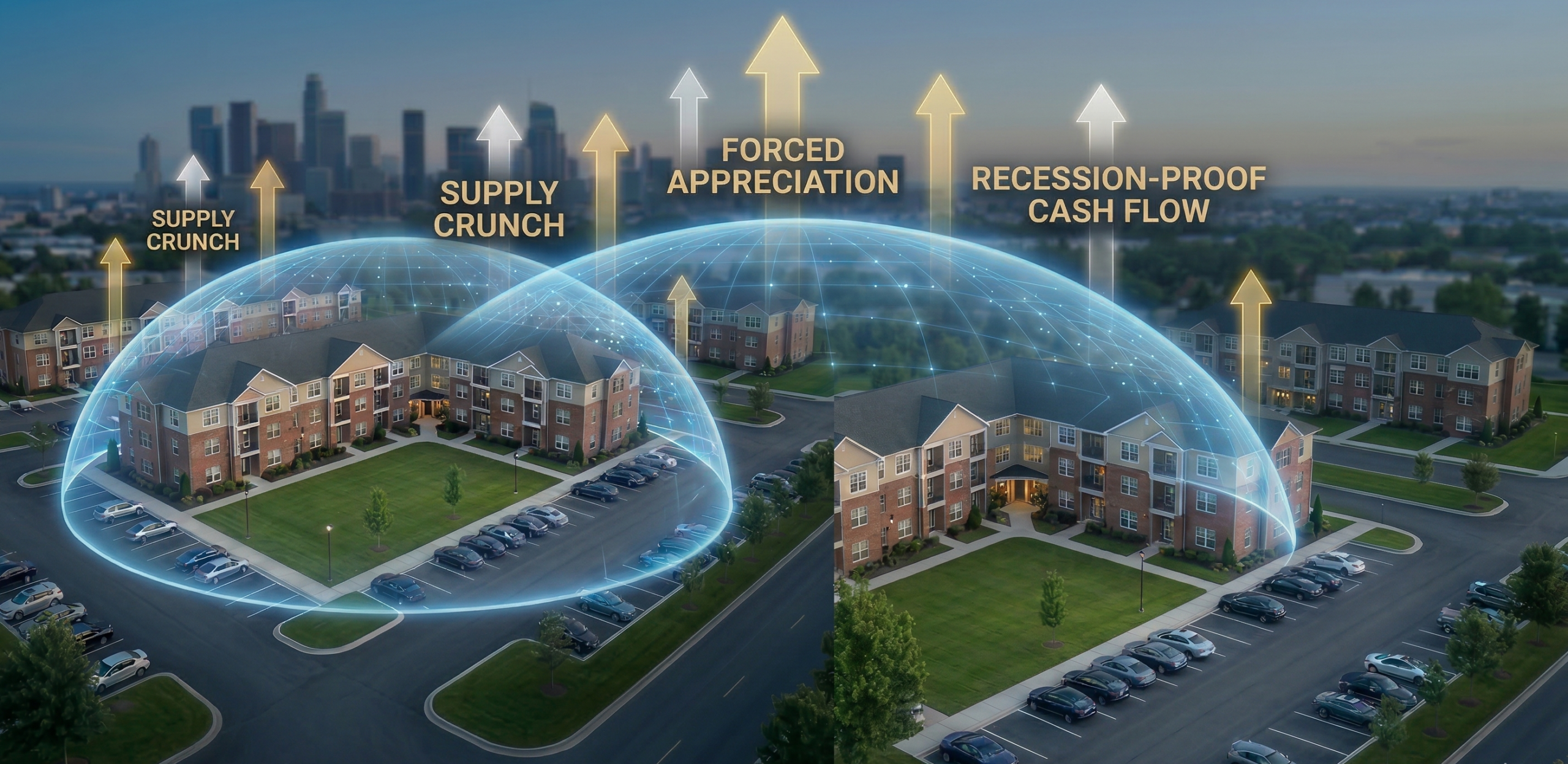
At Altos Holdings, our conviction remains firm: Class B Workforce Housing. This asset class isn’t just a place to live; it is a strategic “Moat” that protects investor capital during economic shifts. Here is why apartment syndication stability starts with the American worker.
The “Sticky” Tenant Base
The primary strength of Class B assets—typically 15 to 30-year-old properties in suburban growth corridors—is the tenant profile. These are the “Essential Workers”: nurses, teachers, police officers, and mid-level managers.
Unlike luxury renters who may move back in with parents or find roommates when the economy dips, workforce tenants prioritize stability. They stay longer, they take pride in their community, and they represent the largest segment of the American population. For an investor, this means lower turnover costs and consistent, predictable cash flow.
The Supply-Demand Imbalance of 2026
For years, developers focused almost exclusively on “Luxury” builds because the margins were higher. Then, the interest rate hikes of the early 2020s stalled new construction across the board.
TThe result? A massive supply crunch in the ‘Affordable Luxury’ space. According to recent NMHC Market Insights, the industry needs to construct millions of new rental units by 2035 to keep pace with demand.There is a desperate shortage of clean, safe, and modernized housing for the median income earner. We aren’t just buying buildings; we are acquiring a supply-demand imbalance that the government cannot fix overnight.
Forced Appreciation: The “Value-Add” Engine
One of the greatest benefits of apartment syndication stability is the ability to control the outcome. In the stock market, you are at the mercy of a CEO or a Fed announcement.
In Class B real estate, we utilize Forced Appreciation. By implementing institutional-grade management and targeted renovations (new flooring, modern lighting, upgraded amenities), we drive the Net Operating Income (NOI). Because commercial real estate is valued based on its income, every dollar we add to the bottom line creates exponential equity for our partners.
The Inflation Hedge
As we navigate 2026, the “Inflation Hedge” remains a top priority for high-net-worth individuals. Multifamily real estate is a unique asset where:
- Rents reset annually: Allowing us to capture inflationary growth.
- Debt stays fixed: While the value of the dollar may fluctuate, the mortgage on the asset remains constant, effectively “shrinking” the debt in real terms over time.
Join the Conversation
Building wealth in 2026 requires moving beyond the volatility of paper assets and into the resilience of hard assets.
Are you ready to stop gambling on the S&P 500 and start investing in the foundation of the American economy?